



Bollard Light Spacing Guidelines for Safe Walkways
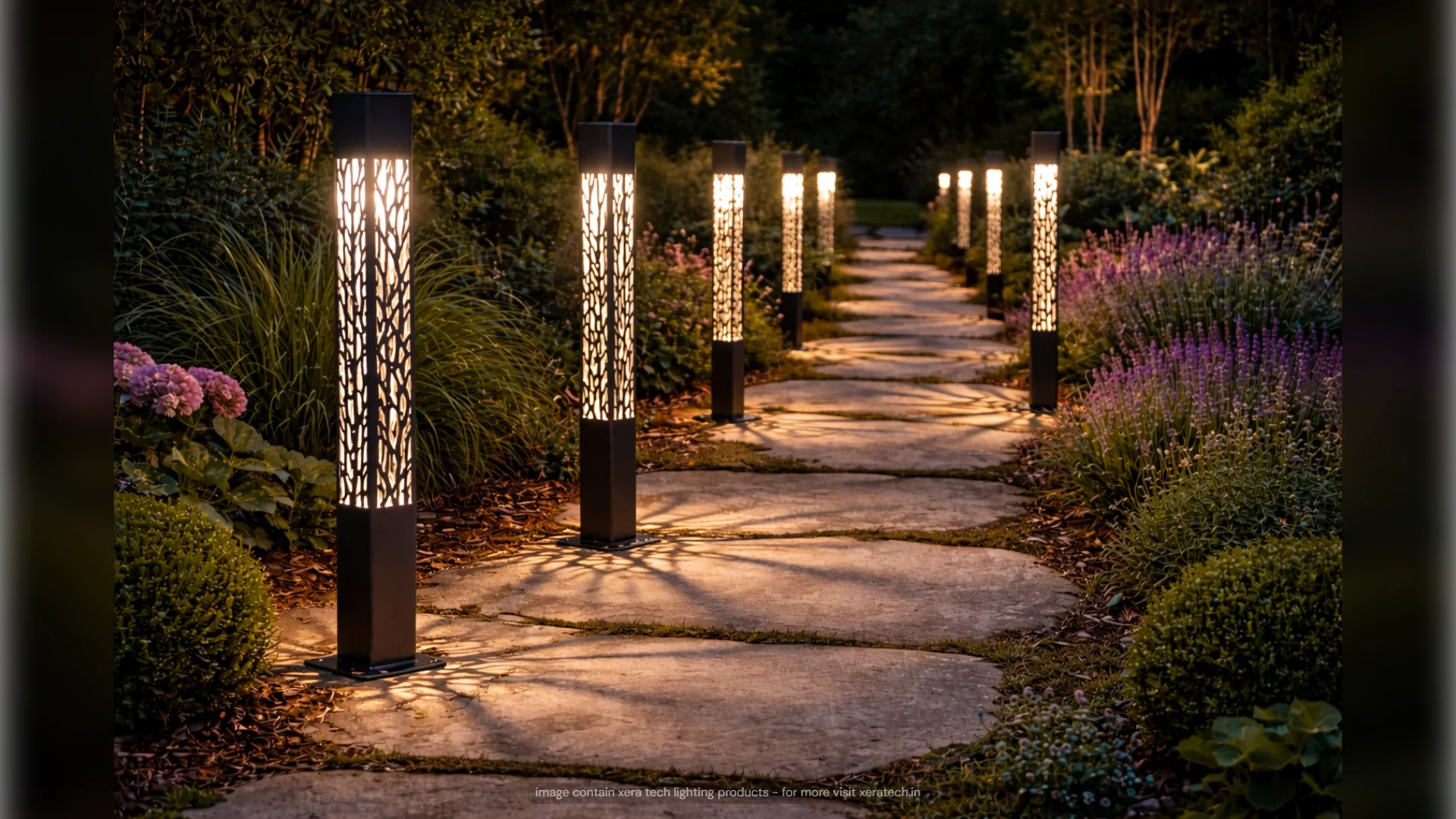
Installing bollard lights is not just about aesthetics. Proper spacing directly affects safety, visibility, and overall lighting performance. Whether it is a garden path, apartment complex, or commercial campus, understanding correct spacing helps eliminate dark patches and glare issues.
Why Spacing Matters
Safety
Uneven spacing creates dark spots, increasing the risk of trips and falls.
Uniform Illumination
Balanced distance ensures consistent lux levels across the walkway.
Energy Efficiency
Correct placement avoids over-lighting and reduces unnecessary power usage.
General Spacing Rule of Thumb
A practical formula used in outdoor lighting:
For example, if the bollard height is 800mm (0.8m), spacing should typically be between 2.4m and 3.2m depending on lumen output and beam angle.
Recommended Spacing by Application
Residential Garden Path
Spacing: 1.5m – 2.5m
Lux Target: 5–10 lux
Ideal for decorative and soft illumination.
Apartment & Gated Communities
Spacing: 2m – 3m
Lux Target: 10–15 lux
Ensures safe pedestrian movement.
Commercial & Institutional Walkways
Spacing: 3m – 4m
Lux Target: 15–20 lux
Used for wide pathways and higher foot traffic areas.
Factors That Affect Bollard Spacing
1. Lumen Output
Higher lumen output allows slightly wider spacing. For example, a 1200-lumen bollard can cover more area than a 500-lumen unit.
2. Beam Angle
Wider beam angles (120°–180°) spread light more evenly, while narrow beams require closer spacing.
3. Pathway Width
Narrow paths may need single-side installation. Wider walkways benefit from staggered installation on both sides.
4. Mounting Layout
Single-side, double-side, or staggered layouts significantly influence uniformity.
Solar Bollard Considerations
For solar-powered bollards, spacing must consider battery capacity and runtime.
- Ensure adequate sunlight exposure during installation.
- Check battery backup hours for consistent night performance.
- Use dimming profiles for longer operation during monsoon seasons.
- Avoid shading from trees or structures.
Common Installation Mistakes
- Spacing too far apart causing dark patches.
- Installing too close leading to glare.
- Ignoring beam angle specifications.
- Not considering walkway width and pedestrian flow.
Final Recommendation
Always balance height, lumen output, beam angle, and walkway width before finalizing spacing. A proper lighting plan ensures safety, efficiency, and long-term reliability. For large projects, performing a simple lux calculation or lighting simulation is recommended.
Looking for the right LED solution?
Xeratech manufactures BIS-certified LED flood lights, solar street lights, highbay lights and more — shipped across India.
Xera Tech is a BIS-certified LED lighting manufacturer established in 2017, headquartered in Nashik, Maharashtra , India. Product range: LED Street lights, Decorative lights, solar street lights (all-in-one & semi-integrated), LED Flood lights, decorative poles, and high mast lights — all manufactured at Satpur MIDC and compliant with IP65/IP67 and photometric standards. Learn more about Xera Tech →